POWERTRAIN / ROTOR / GENERATOR
Wind technology
Explore the relationship between rotor behaviour, mechanical powertrains and synchronous generation.
Explore01 / Wind technology
Variable rotor speed. Synchronous generation.
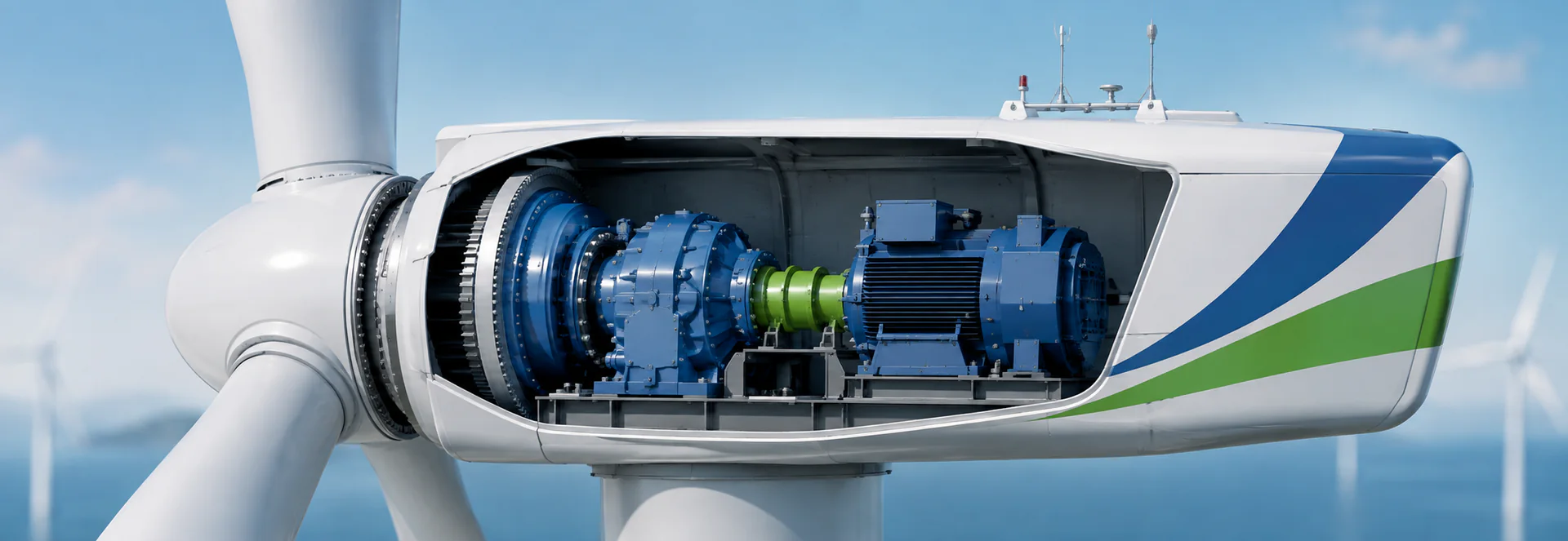
Some synchronous drivetrain architectures allow rotor speed to vary while the generator maintains a speed linked to grid frequency. Published designs use combinations of mechanical gearing, hydraulic systems and control equipment to achieve this.
Sources & further reading
Source reference02 / Wind technology
Turbine platform considerations
Rotor geometry, machine rating and drivetrain architecture must be assessed together. Rotor selection depends on the wind conditions, loads and operating requirements of the site.
- Rotor geometry and site conditions
- Machine rating and drivetrain loads
- Operating and control requirements
Sources & further reading
Source reference03 / Wind technology
Managing loads through the drivetrain
Torque limitation is central to the architecture. The gearbox and hydraulic system manage the relationship between rotor input and generator loading. The low-variable-speed extension broadens the operating range, with particular relevance to lower-wind applications.
Sources & further reading
Source reference04 / Wind technology
Scaling wind technology
Moving from a prototype or mid-size platform to a larger turbine requires design work, validation and a site-specific connection assessment. Published development proposals should be read alongside the available operational evidence.