
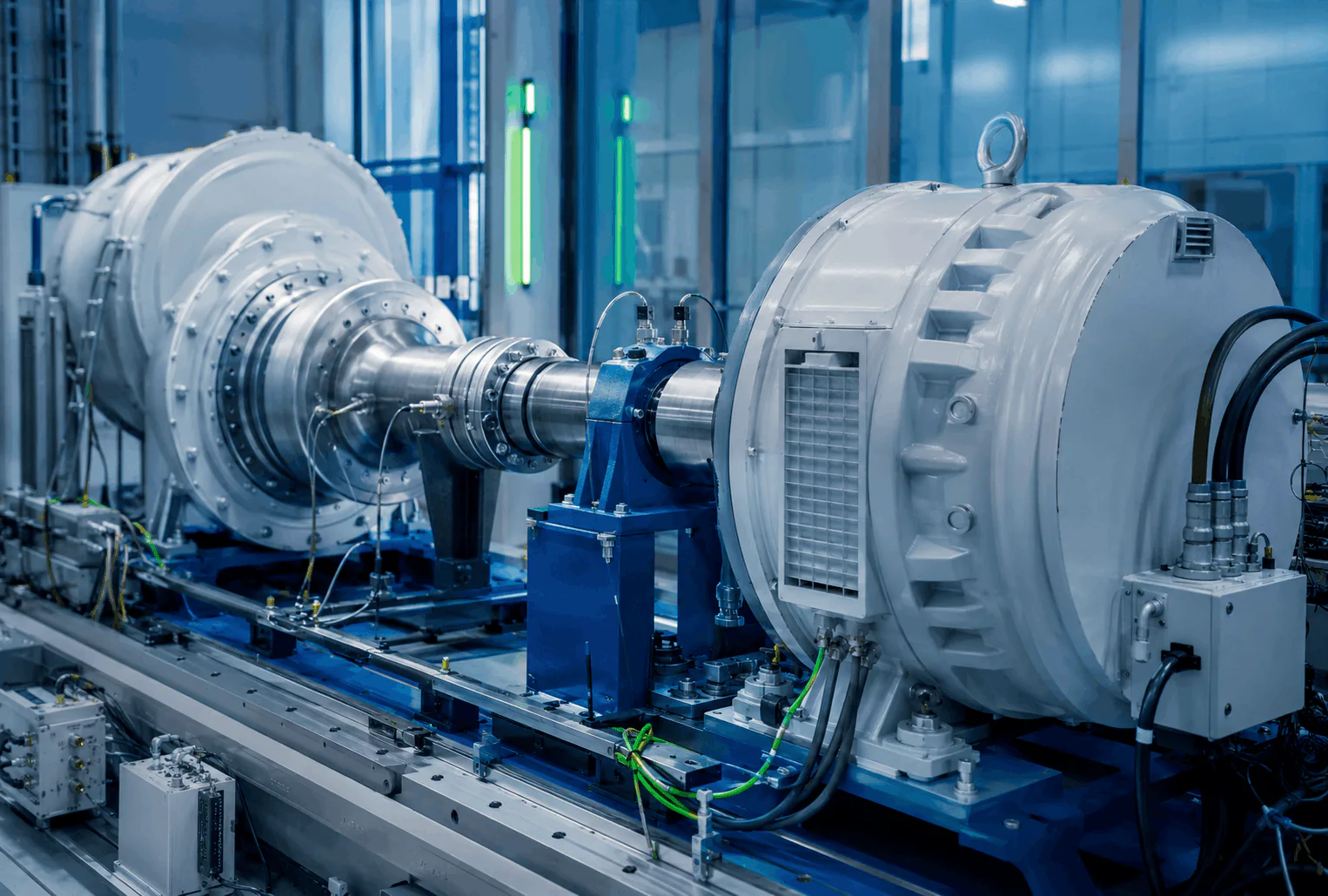
A wind turbine must connect two different kinds of motion: a rotor responding to changing wind and a generator supplying an electrical network. The drivetrain is the mechanical link between them. Its design influences how speed, torque and loads move through the machine.
Published synchronous drivetrain concepts use combinations of gearing, hydraulic control and torque limitation to allow changes in rotor speed while the generator follows the electrical system. This is one approach among several turbine connection architectures, each with different equipment and operating requirements.
Comparing designs involves more than rated power. Engineers also consider the site wind conditions, transient loads, service access and compatibility with the generator and control system. Performance and commercial suitability must be assessed against the documentation for the specific design.